How to change your name after marriage
Introduction
Changing your name after marriage is both a personal choice and a legal process that requires careful attention to detail. While the tradition is common in many cultures, the actual steps involve updating official records across multiple institutions. From your marriage certificate to your passport and bank accounts, each update ensures your identity remains consistent everywhere. Missing even one step can lead to confusion later, especially when dealing with travel, finance, or employment. This guide walks you through the entire process in a clear and practical way, so you can handle each stage confidently and avoid unnecessary delays or mistakes.
Understanding the Legal Process of Name Change After Marriage
The legal process of changing your name after marriage is mainly about updating your identity across government and private records. In most cases, your marriage certificate serves as the primary document that allows you to adopt your spouse’s surname or make any name adjustment. The process may vary depending on your country, but the overall structure remains similar. You typically start with national identification records, followed by financial and personal accounts. The goal is to ensure that your new name is recognized consistently everywhere, preventing mismatches in official documents, travel records, and financial systems.
Step-by-Step Guide to Changing Your Name After Marriage
Step 1: Obtain Your Marriage Certificate
Your marriage certificate is the foundation of the entire name change process. Without it, most institutions will not accept your request. If you already have it, ensure all details are correct and match your existing identification. If not, you’ll need to apply through the relevant local authority or registry office. Once issued, keep multiple copies as many organizations will request an official version during updates.
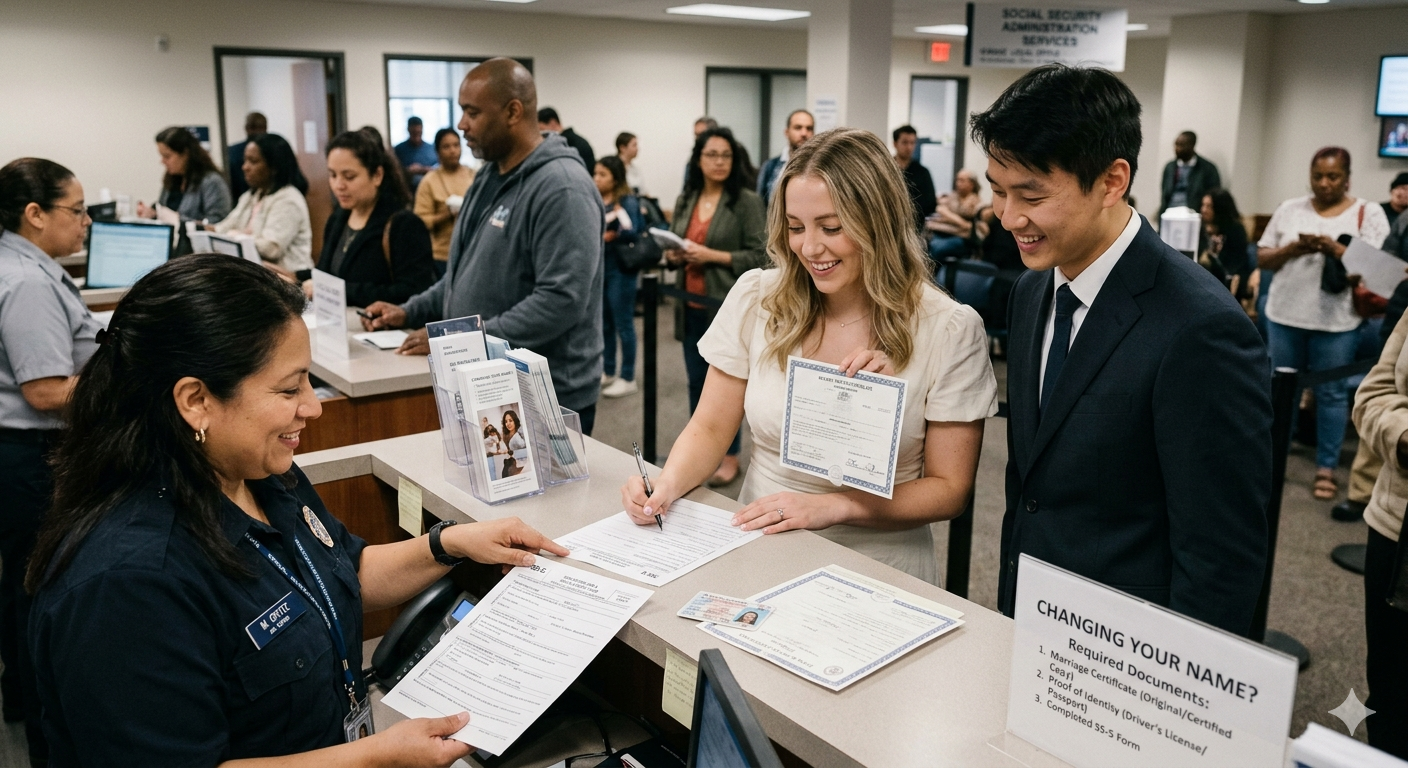
Step 2: Update Your Social Security or National ID
After securing your marriage certificate, the next step is updating your national identification records. This could be a Social Security record, CNIC, or similar government ID depending on your country. This step is crucial because most other institutions rely on this record for verification. You will usually need your marriage certificate, old ID, and a completed application form.
Step 3: Change Your Name on Passport and Travel Documents
Your passport should be updated as soon as possible, especially if you plan to travel. A mismatch between your passport and other IDs can cause issues at immigration. Most passport offices require your updated national ID and marriage certificate. Once updated, your travel documents will reflect your new legal identity, ensuring smooth international travel.
Step 4: Update Driver’s License or National ID Card
Updating your driver’s license or national identity card is another important step. This ensures your everyday identification matches your legal name. Visit the relevant licensing authority with your updated documents. Some regions allow online applications, while others require in-person verification. Always check local rules before applying.
Step 5: Update Bank Accounts and Financial Records
Banks and financial institutions must be informed after your legal documents are updated. This includes savings accounts, credit cards, and loan records. You’ll need to provide your updated ID and marriage certificate. Ensuring consistency in financial records helps avoid transaction issues and keeps your financial identity secure.
Updating Personal and Professional Records
Change Name on Workplace and Employment Records
Once your legal documents are updated, notify your workplace HR department. This ensures your payroll, tax records, and employee profile reflect your new name. It is important because inconsistencies can affect salary processing and official employment verification. Most companies will request a copy of your updated ID and may update internal systems within a few days or weeks depending on their policy.
Update Utility Bills and Household Accounts
Utility services such as electricity, gas, water, and internet should also reflect your new name. While not always urgent, updating these accounts helps maintain consistency in household records. Most providers allow name changes through customer service or online portals. You may need to submit proof of identity or your marriage certificate.
Update Insurance Policies
Insurance companies must also be notified to update your policy details. This includes health, life, and vehicle insurance. Keeping your name consistent ensures there are no issues during claims or policy renewals. Submit updated identification documents to your provider to complete the process smoothly.
Changing Your Name on Digital Platforms
Social Media Accounts
Updating your name on social media platforms like Facebook, Instagram, and LinkedIn helps maintain a consistent digital identity. While not legally required, it is important for personal branding and recognition. Each platform has its own settings for name changes, and some may require identity verification before approval.
Email and Online Accounts
Your email address and online accounts should also reflect your updated identity where possible. While changing email addresses completely may not always be necessary, updating display names and signatures helps maintain professionalism. It also ensures consistency across communication channels, especially for work-related accounts.
Common Challenges During Name Change Process
One of the biggest challenges is dealing with delays across multiple institutions. Each organization has its own processing time, which can slow things down. Another issue is document mismatch, where slight differences in spelling or formatting can cause rejection. International travelers may also face additional verification steps. Staying organized and following a step-by-step approach can help reduce stress and avoid repeated applications.
Tips for a Smooth Name Change After Marriage
To make the process easier, start with government-issued IDs before moving to private accounts. Keep multiple copies of your marriage certificate ready for submission. Maintain a checklist of all places where your name needs updating, so nothing is missed. It also helps to update records gradually rather than all at once, ensuring better control and fewer errors throughout the process.
Frequently Asked Questions (FAQs)
How long does it take to change your name after marriage?
The timeline depends on your country and institutions involved. Government ID updates may take a few weeks, while banks and private services may update records faster once documents are verified.
Do I need a lawyer to change my name?
In most cases, no lawyer is required. The process is straightforward and can be completed by submitting your marriage certificate and identification documents to the relevant authorities.
Can I keep my maiden name professionally?
Yes, many people continue using their maiden name professionally while legally updating their documents. This is common in careers where name recognition is important.
What happens if I don’t update my name everywhere?
If records are inconsistent, you may face issues with banking, travel, or legal verification. Keeping all documents aligned helps avoid confusion and delays.
Conclusion
Changing your name after marriage is a structured process that becomes simple when handled step by step. It starts with legal documents and gradually moves through government IDs, financial accounts, and personal records. While it may take time to update everything, staying organized ensures a smooth transition. The key is consistency across all systems so your new identity is fully recognized without complications in the future.