
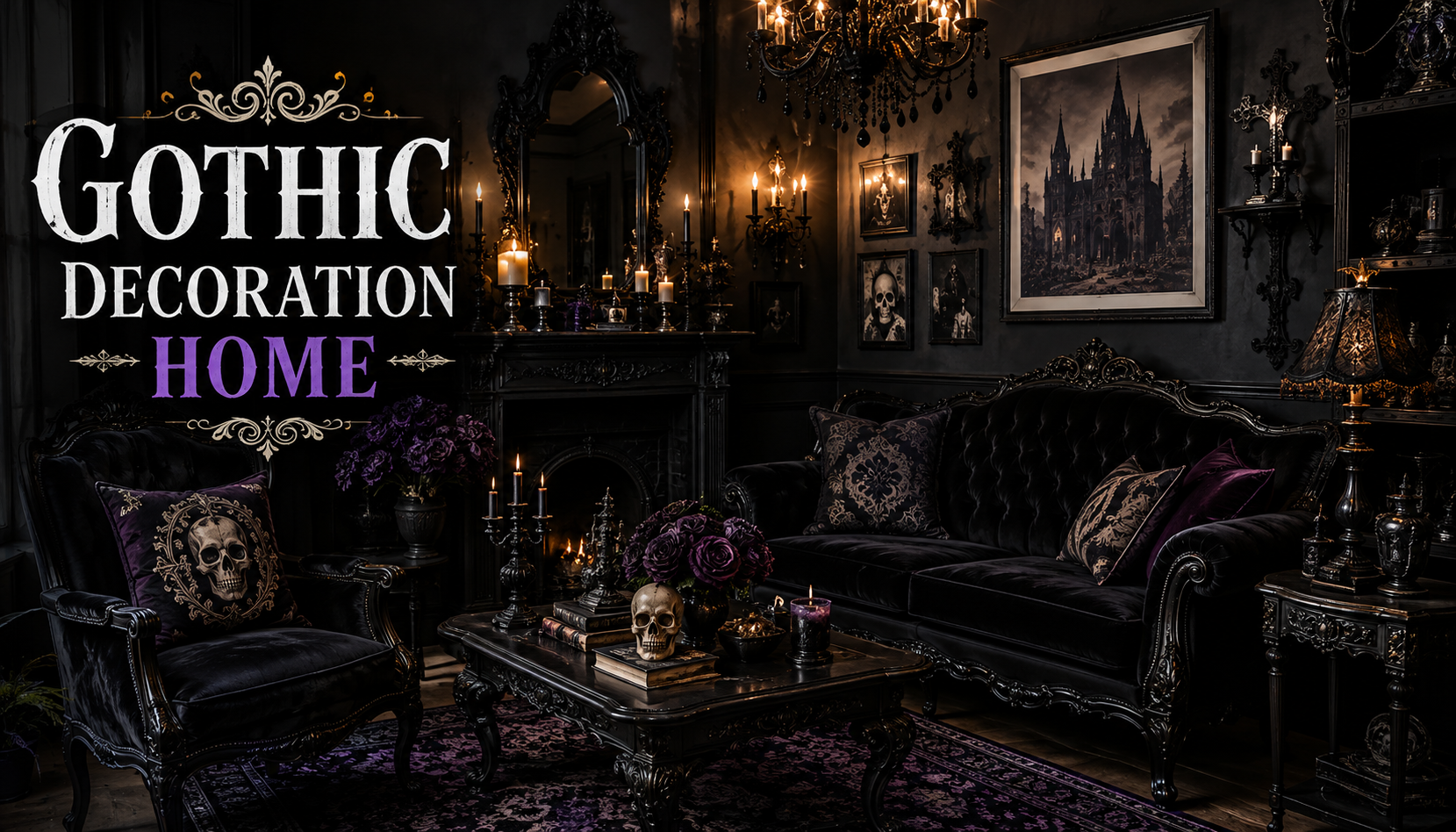
Gothic Decoration Home
Gothic Home Decor: The Complete Guide to Dark, Elegant Interior Design
Gothic home decor turns any room into a moody, romantic retreat built on deep color, ornate detail, and dramatic contrast. Rather than feeling cold or theatrical, a well-executed gothic space feels rich, intentional, and timeless. This guide breaks down the colors, furniture, lighting, and room-specific ideas you need to bring the aesthetic home — whether you’re redecorating one accent wall or committing to a full gothic transformation.
What Is Gothic Home Decor?
Gothic home decor draws from medieval architecture, Victorian mourning aesthetics, and 19th-century Romanticism, translating cathedral-inspired drama into livable spaces. Think arched silhouettes, candlelit ambiance, and ornate detailing rather than horror-movie clichés. The style favors craftsmanship over minimalism, layering rich fabrics, aged metals, and carved wood to create a sense of history in every room. It’s less about darkness for its own sake and more about elevating shadow, texture, and asymmetry into something intentional. Done well, gothic decor reads as elegant and lived-in, not staged or costume-like.
Key Characteristics of the Gothic Aesthetic
Gothic interiors share a few defining traits: deep saturated colors, ornate silhouettes, and a strong contrast between light and shadow. Pointed arches, quatrefoil patterns, and wrought iron detailing echo cathedral architecture, while heavy drapery and tufted upholstery add weight and texture. Natural materials dominate — aged wood, stone, brass, and velvet — over glossy modern finishes. Asymmetry is welcomed rather than avoided, with mismatched frames, antique clusters, and layered textiles creating visual interest. The goal is a space that feels curated over generations, not purchased in a single trip.
Gothic vs. Dark Academia vs. Victorian Decor
These three styles overlap but aren’t interchangeable. Victorian decor is ornate and formal, rooted in 1800s parlor design with floral wallpaper and gilded frames. Dark academia leans scholarly, built around leather-bound books, tweed textures, and warm wood tones with minimal ornamentation. Gothic decor sits between them, borrowing Victorian drama and architectural motifs while pushing the palette darker and the silhouettes sharper. Where Victorian decor feels bright and busy, gothic decor stays shadowed and restrained. Understanding this distinction helps you shop intentionally instead of blending three aesthetics into a cluttered result.
Gothic Color Palettes for Every Room
A gothic palette starts with a dark base — black, charcoal, or deep plum — layered with jewel tones like burgundy, emerald, or navy. These colors read as sophisticated rather than heavy when paired correctly, especially against warm wood and metallic accents. Avoid flat, single-tone rooms; gothic spaces rely on tonal depth, using multiple shades of one color family to create dimension. Matte and satin finishes suit walls better than gloss, which can feel clinical against ornate furniture. The palette should feel curated, not chosen at random from a paint swatch card.
Deep Black, Burgundy & Emerald Combinations
Black works best as a grounding tone — trim, furniture, or a single accent wall — rather than covering every surface, which can flatten a room’s architecture. Burgundy adds warmth and works well on upholstery, curtains, or a statement rug. Emerald introduces contrast without breaking the mood, especially in velvet textiles or ceramic accents. Combining all three creates a layered, jewel-box effect:
- Black walls with burgundy velvet curtains and brass hardware
- Emerald accent chair against charcoal or deep plum walls
- Burgundy bedding paired with black wrought-iron frame details
Adding Metallic Accents (Gold, Brass, Pewter)
Metallics keep a dark palette from feeling flat by catching and reflecting available light. Aged brass and antique gold suit gothic interiors better than polished chrome, which reads as modern rather than historic. Pewter and wrought iron work particularly well for hardware, candle holders, and mirror frames, reinforcing the medieval influence. Use metallics sparingly and consistently — mixing warm golds with cool silvers in the same room can undercut the intentional, curated feel gothic decor depends on. One dominant metal tone per space keeps the design cohesive.
How to Avoid a Cave-Like Feel with Lighting Contrast
Dark palettes need deliberate lighting to avoid feeling oppressive. Layer ambient, task, and accent lighting rather than relying on a single overhead fixture, which flattens shadow and detail. Warm-toned bulbs (2700K or lower) complement dark walls far better than cool white light. Mirrors placed opposite windows or light sources help bounce natural light deeper into the room. Candlelight or flame-effect bulbs add authentic gothic ambiance without sacrificing visibility, especially in evening hours when the aesthetic feels most at home.
Gothic Furniture & Statement Pieces
Furniture carries most of the gothic aesthetic’s visual weight, so a few well-chosen pieces outperform a room full of smaller accents. Look for dark wood frames, curved silhouettes, and rich upholstery in velvet or leather. Statement pieces — a carved headboard, a wingback chair, an ornate mirror — should anchor the room, with supporting furniture kept simpler to avoid visual competition. Scale matters here: gothic furniture tends to feel substantial and grounded rather than delicate, so proportion each piece to the room size before committing.
Victorian-Inspired Chairs, Sofas & Headboards
Tufted upholstery, rolled arms, and curved wooden legs define Victorian-inspired seating and remain a gothic decor staple. A single statement chair in dark velvet often does more for a room than a full matching set. Headboards benefit from height and detail — carved wood, tufted fabric, or wrought iron framing draw the eye upward and reinforce the cathedral-inspired scale gothic interiors aim for. When shopping, prioritize silhouette and material over exact period accuracy; a modern reproduction with the right curves reads just as authentically gothic as an antique original.
Wrought Iron and Carved Wood Accents
Wrought iron introduces the architectural edge that separates gothic decor from generic “dark academia” styling. Candle sconces, curtain rods, bed frames, and shelving brackets in black iron reinforce the medieval influence without requiring a full furniture overhaul. Carved wood — whether in a mirror frame, side table, or cabinet door — adds the ornate detailing central to the aesthetic. These accents work best as focal points rather than repeated throughout a room:
- One iron chandelier or sconce set per room
- A single carved wood cabinet or console table
- Iron curtain rods paired with heavy drapery fabric
Where to Find Affordable Gothic Furniture
Estate sales, antique shops, and vintage marketplaces often carry authentic period pieces at lower cost than new gothic-styled furniture. Facebook Marketplace and local thrift stores frequently have ornate frames, dark wood furniture, and iron fixtures that only need minor restoration. For new pieces, search retailers that specialize in Victorian reproduction or dark academia furniture rather than general home stores, which rarely carry the silhouette gothic decor requires. Painting or staining an existing dark wood piece black or deep walnut is often the most budget-friendly path to an authentic look.
Gothic Wall Decor & Art Ideas
Walls do heavy lifting in gothic interiors, since they set the palette and texture before any furniture enters the room. Ornate frames, layered art, and architectural wallpaper all reinforce the aesthetic without requiring structural changes. Group smaller pieces into gallery-style clusters rather than spacing them evenly — asymmetry supports the gothic look better than a gridded arrangement. Mirrors deserve particular attention, since they double as both decor and functional light-bouncing tools in darker rooms, making them one of the highest-impact pieces you can add.
Ornate Mirrors, Frames & Wall Sconces
Oversized mirrors with carved or wrought iron frames are one of the most recognizable gothic decor pieces, adding height, light, and architectural interest in one addition. Cluster smaller ornate frames — empty or filled with dark botanical prints — around a single large mirror for a gallery effect. Wall sconces in aged brass or black iron reinforce the candlelit feel central to the style while freeing up surface space for other decor. Choose asymmetrical arrangements over perfectly matched sets to keep the display feeling collected rather than purchased as a kit.
Dark Academia Art, Tapestries & Bookshelves
Botanical illustrations, anatomical prints, and dark landscape paintings suit gothic walls better than abstract or brightly colored art. Tapestries add texture and sound absorption while reinforcing the medieval, tactile quality central to the aesthetic. Floor-to-ceiling or built-in bookshelves double as both storage and decor, especially when styled with leather-bound books, small sculptures, and dried botanicals. Rather than filling every shelf evenly, leave intentional negative space and vary object heights to avoid a cluttered, big-box-store appearance.
Wallpaper Patterns (Damask, Botanical, Baroque)
Damask and baroque patterns in dark, tonal colorways add depth without overwhelming a room, especially on a single accent wall rather than all four. Botanical wallpaper — particularly dark florals or forest motifs — softens the aesthetic slightly, making it more approachable for shared living spaces. Textured or flocked wallpaper adds a tactile dimension that flat paint can’t replicate, reinforcing the historic, hand-crafted feel gothic decor relies on. For renters, large-format peel-and-stick wallpaper panels now replicate these patterns without long-term commitment.
Gothic Lighting Ideas
Lighting determines whether a gothic room feels atmospheric or simply dark, making it one of the most important — and most overlooked — elements of the style. Multiple light sources at varying heights create the layered shadow gothic interiors depend on, rather than a single bright overhead fixture. Dimmer switches are almost essential, allowing the same room to shift between bright and functional during the day and moody in the evening. Prioritize warm bulb temperatures and fixtures with visible detail, since the light source itself often doubles as decor.
Candelabras, Chandeliers & Moody Ambient Lighting
Chandeliers in wrought iron or aged brass serve as natural focal points, especially in dining rooms and entryways where ceiling height allows for a dramatic fixture. Candelabras — whether functional or electric flame-effect — add gothic ambiance at a lower cost and commitment than a full chandelier replacement. Wall-mounted sconces with amber or warm-white bulbs support the candlelit feel throughout the room without requiring open flame. For rentals, plug-in sconces and battery-operated candle clusters replicate the effect without any wiring changes.
Layering Light for Drama Without Darkness
Combine ambient, task, and accent lighting rather than relying on one source to do everything. Ambient lighting (overhead or ceiling-mounted) sets the base level; task lighting (reading lamps, desk lights) supports function; accent lighting (sconces, candles) adds mood and shadow. Placing lamps at varying heights — floor, table, and wall — creates depth that a single overhead fixture can’t achieve. This layered approach lets a gothic room stay fully usable during the day while still feeling atmospheric once the sun goes down.
Room-by-Room Gothic Decorating Ideas
Applying gothic decor consistently across a home means adapting the same core principles — dark palettes, ornate detail, layered lighting — to each room’s function. A living room can lean more dramatic since it’s a shared, occasional-use space, while a bedroom often benefits from a slightly softer, more restful version of the aesthetic. Smaller spaces like bathrooms and entryways offer low-commitment ways to test the style before investing in larger furniture pieces. The sections below break down practical starting points for each area of the home.
Gothic Living Room Ideas
Start with a dark accent wall or ceiling rather than committing the entire room to black, which can feel heavy in a high-traffic space. A tufted velvet sofa or wingback chair anchors the seating area, paired with a carved coffee table and wrought iron light fixtures. Layer textiles — a burgundy or emerald throw, patterned pillows, a vintage rug — to add warmth against darker walls. Gallery-style art clusters and an oversized ornate mirror complete the look while keeping the room feeling curated rather than sparse.
Gothic Bedroom Decor
Bedrooms benefit from a softer, more restful take on gothic decor, since the space is meant for rest rather than drama. A statement headboard — carved wood or tufted fabric — serves as the room’s focal point, paired with deep-toned bedding in burgundy, plum, or forest green. Wrought iron sconces flanking the bed replace harsh overhead lighting, while heavy curtains block light and add insulation. Keep surfaces relatively clear, using one or two ornate accent pieces rather than layering decor throughout the entire room.
Gothic Bathroom & Entryway Touches
Bathrooms and entryways offer a low-risk way to introduce gothic elements without full-room commitment. A black or dark vanity, brass fixtures, and a botanical or damask wallpaper on one wall bring the aesthetic into a small footprint. Entryways benefit from a single statement piece — an ornate console table, an oversized mirror, or a wrought iron coat rack — paired with warm sconce lighting. Both spaces work well as a test run before applying the same palette and materials to larger rooms in the home.
Gothic Home Decor on a Budget
Gothic decor doesn’t require an antique-store budget to execute convincingly. Paint is the single highest-impact, lowest-cost change available, instantly shifting a room’s mood before any furniture is purchased. Thrifted and secondhand pieces often suit the aesthetic better than new furniture, since gothic decor values a worn, collected-over-time look rather than a showroom finish. Prioritize spending on one or two statement pieces — a mirror, a chair, a lighting fixture — and fill in the rest with budget-friendly textiles and secondhand finds.
DIY Gothic Accents
Several gothic staples are achievable as weekend projects with minimal cost or skill. Painting an existing wood frame black or antique gold instantly gives it a gothic edge. Dried or faux botanicals in dark vases replicate the moody florals seen in higher-end gothic styling. Consider these low-cost DIY swaps:
- Stencil damask patterns onto plain walls instead of buying patterned wallpaper
- Age brass hardware with a vinegar-and-salt solution for an antique finish
- Reupholster a thrifted chair in dark velvet fabric
Thrift & Vintage Shopping Tips
Estate sales tend to yield the most authentic gothic-suited pieces, particularly ornate frames, dark wood furniture, and metal fixtures. Search listings using terms like “Victorian,” “antique,” or “wrought iron” rather than “gothic,” since sellers rarely list items under the aesthetic’s modern name. Facebook Marketplace and local thrift stores often underprice ornate furniture simply because it’s out of step with current mainstream trends, making it a reliable source for statement pieces. Inspect joints and upholstery condition carefully, since older furniture may need minor restoration before use.
Common Mistakes to Avoid in Gothic Decorating
A few recurring mistakes separate an elegant gothic room from an overwhelming one:
- Painting every surface black — without lighting contrast, this flattens a room instead of adding drama
- Skipping layered lighting — a single overhead fixture makes dark rooms feel dim rather than moody
- Mixing too many eras or metals — combining Victorian, medieval, and modern pieces without a unifying color or material creates visual noise
- Overcrowding surfaces — gothic decor relies on intentional, curated placement rather than maximalist clutter
- Ignoring scale — small, delicate furniture reads as mismatched against the substantial, grounded pieces the aesthetic calls for
Avoiding these pitfalls keeps a gothic room feeling deliberate and elegant rather than costume-like.
FAQ
What colors are used in gothic home decor? Gothic home decor centers on deep, saturated tones — black, charcoal, and deep plum as base colors, layered with jewel tones like burgundy, emerald, and navy. These shades are balanced with warm metallic accents in brass, gold, or pewter to prevent the palette from feeling flat. Matte and satin finishes work better than glossy ones, supporting the historic, hand-crafted feel central to the aesthetic.
Is gothic decor the same as goth style? Not exactly. Goth style refers to a subculture with roots in 1980s music and fashion, while gothic home decor draws from medieval architecture and Victorian design history. They share a dark, dramatic sensibility, but gothic decor focuses on elegance and craftsmanship rather than subcultural symbolism, making it suitable for a much wider range of homes and tastes.
How do I make gothic decor feel cozy, not cold? Layered, warm-toned lighting is the biggest factor — avoid cool white bulbs and single overhead fixtures. Add texture through velvet, wool, and heavy drapery, and incorporate warm metallics like brass or gold rather than cold chrome. Rugs, throws, and soft furnishings soften hard surfaces like wrought iron and dark wood, keeping the room inviting rather than austere.
Can gothic decor work in a small apartment? Yes, with adjustments. Use dark tones on one accent wall rather than the entire space, and rely on mirrors and layered lighting to prevent the room from feeling smaller. Choose one or two statement furniture pieces instead of filling the room, and use vertical elements like tall bookshelves or floor-to-ceiling curtains to draw the eye upward.
What furniture defines gothic interior design? Tufted velvet seating, carved wood headboards, wrought iron light fixtures, and ornate mirrors are the clearest markers of gothic furniture. Pieces tend to be substantial in scale with curved silhouettes and rich upholstery, often echoing Victorian or medieval design influences rather than sleek, minimalist modern furniture lines.
Is gothic home decor expensive to achieve? It doesn’t have to be. Paint is the lowest-cost, highest-impact change, and thrifted or secondhand furniture often suits the aesthetic better than new pieces. Estate sales and vintage marketplaces frequently offer ornate, gothic-appropriate items at lower prices simply because the style falls outside current mainstream trends.