
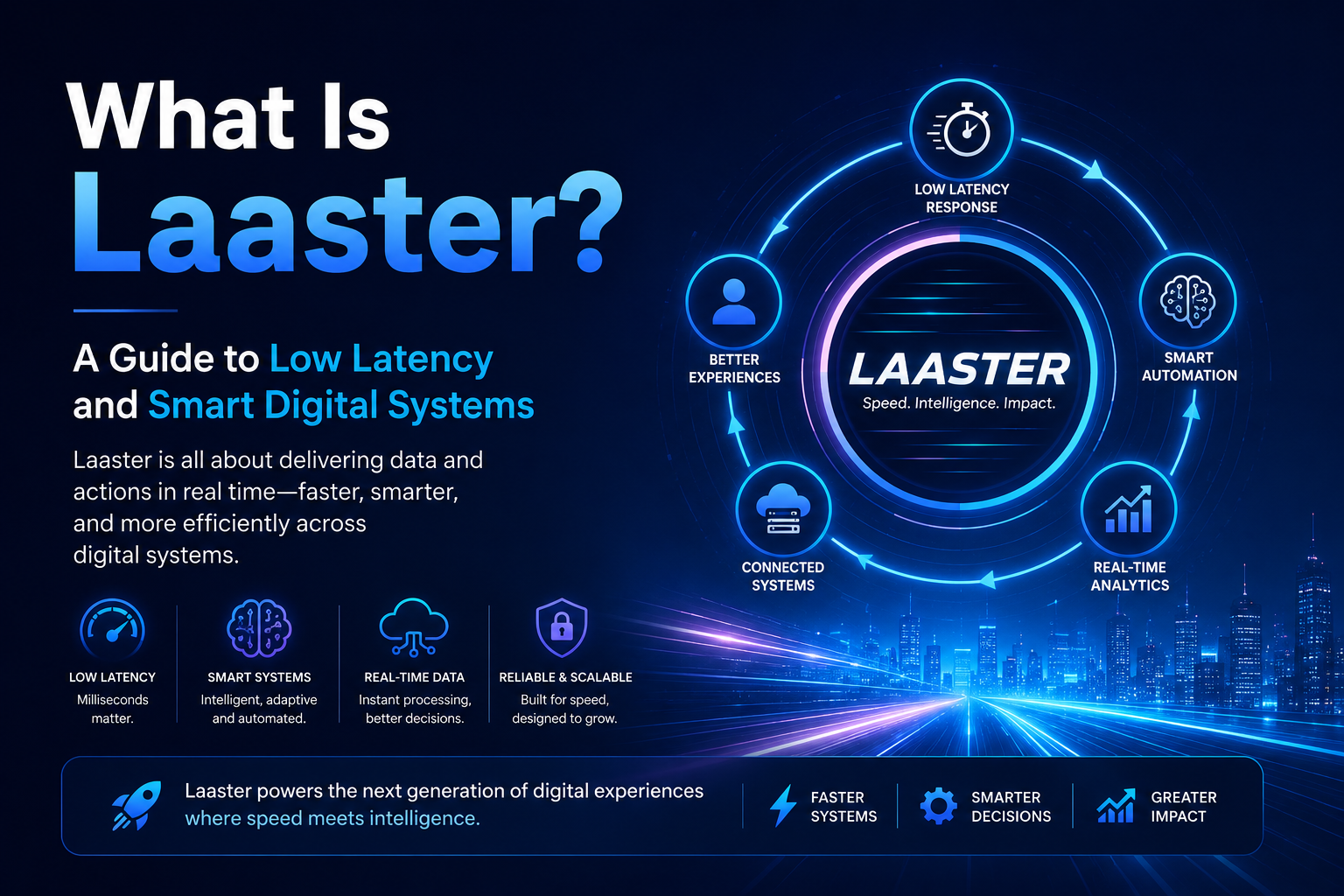
What Is Laaster? A Guide to Low Latency and Smart Digital Systems
Introduction: Understanding Laaster and Its Role in Modern Digital Technology
Technology is moving toward a future where speed, intelligence, and instant responses are becoming essential. Laaster represents the growing focus on low-latency digital systems designed to process information quickly and deliver smoother experiences. As businesses and users rely more on connected devices, artificial intelligence, cloud platforms, and real-time services, reducing delays has become a major priority.
Low-latency systems help digital platforms respond faster, improve efficiency, and support smarter decision-making. From automated industries to intelligent applications, faster communication between systems creates new possibilities. Understanding Laaster helps explain how modern digital environments are becoming more responsive, connected, and capable of handling complex tasks with greater accuracy.
What Is Laaster? Understanding the Core Concept
Laaster refers to the idea of building digital systems that prioritize speed, responsiveness, and intelligent data handling. While traditional technologies often focus mainly on storing and processing information, Laaster-style systems emphasize how quickly that information can be accessed and acted upon.
The main goal behind Laaster is to reduce delays between data collection, analysis, and response. This approach is especially valuable in environments where even small delays can affect performance, such as financial platforms, smart devices, and automated systems. By combining advanced computing methods with efficient communication, Laaster supports faster and more reliable digital experiences.
The Meaning and Purpose Behind Laaster
The purpose of Laaster is centered around improving how digital systems communicate and operate. Instead of waiting for information to travel through multiple slow processes, low-latency solutions aim to deliver faster outcomes.
These systems are designed to create smoother interactions between users, devices, and applications. Whether it is a smart assistant responding instantly or an industrial machine adjusting automatically, the focus remains on reducing unnecessary delays.
Laaster highlights the importance of speed as a key factor in modern technology. As digital demands increase, faster systems become essential for improving performance and reliability.
How Laaster Works in Digital Environments
Laaster-based systems work by optimizing the journey of data from its source to the final action. They use efficient processing methods, advanced networks, and intelligent technologies to reduce waiting time.
Instead of depending only on centralized systems, many modern low-latency solutions use approaches like edge computing, where data is processed closer to where it is created. This reduces communication delays and improves response speed.
By improving data flow and system coordination, Laaster helps create digital environments that feel faster, smarter, and more efficient.
Why Low Latency Matters in Modern Digital Systems
Low latency has become one of the most important factors in today’s technology landscape. Users expect websites, applications, and devices to respond instantly. Even a short delay can affect satisfaction, productivity, and overall performance.
Modern industries depend on quick data exchange to operate effectively. From online services to automated machines, systems need to process information rapidly to deliver accurate results. Laaster focuses on this need by supporting faster communication and better responsiveness across digital platforms.
The Importance of Faster Response Times
Fast response times directly influence how people interact with technology. A system that reacts immediately creates a smoother and more reliable user experience.
For example, online gaming, video conferencing, and digital payments require quick responses to function properly. Delays can cause interruptions, errors, or poor performance.
Businesses also benefit from faster systems because employees and customers can complete tasks more efficiently. Low latency helps reduce unnecessary waiting periods and allows technology to perform closer to real-time expectations.
How Low Latency Improves Smart Technologies
Smart technologies depend on quick decision-making. Artificial intelligence systems, connected devices, and automated tools need fast data processing to deliver accurate results.
Low latency allows these technologies to analyze information and respond without significant delays. This is especially important in areas like smart homes, healthcare technology, and industrial automation.
As technology becomes more intelligent, the ability to process information instantly will continue to influence how effectively these systems perform.
Key Features of Laaster-Based Digital Systems
Laaster-based systems are built around several important features that improve digital performance. These systems focus on speed, automation, adaptability, and efficient communication.
Unlike older approaches that may struggle with large amounts of real-time data, modern low-latency solutions are designed to handle complex tasks more effectively. They combine advanced infrastructure with intelligent software to create faster and more flexible digital environments.
Real-Time Data Processing and Faster Communication
One of the biggest advantages of Laaster systems is their ability to process information in real time. Data can be analyzed and acted upon quickly without unnecessary delays.
This capability is useful for applications that require immediate responses, such as monitoring systems, smart devices, and automated platforms.
Faster communication improves coordination between different technologies, allowing systems to work together more efficiently and provide better results.
Smart Automation and Intelligent Operations
Automation plays a major role in Laaster-based systems. By using artificial intelligence and machine learning, these systems can complete tasks with minimal human involvement.
Smart automation helps businesses improve workflows, reduce errors, and increase productivity. It allows technology to handle repetitive processes while people focus on more complex decisions.
The combination of speed and intelligence makes automated systems more powerful and effective.
Scalability and Flexible Digital Infrastructure
Modern digital systems need to grow as user demands increase. Laaster-focused infrastructure is designed to support expansion without losing performance.
Cloud technologies, distributed networks, and flexible architectures help systems manage larger workloads efficiently.
This scalability allows organizations to adapt quickly while maintaining fast and reliable operations.
How Laaster Technology Is Used Across Different Industries
Low-latency technology is influencing many industries by improving speed, accuracy, and automation. As organizations collect more data, they need systems capable of processing information quickly.
Laaster concepts support industries where real-time performance matters. From artificial intelligence to connected devices, faster systems are creating new opportunities for innovation.
Laaster in Artificial Intelligence and Machine Learning
Artificial intelligence requires fast data processing to deliver useful results. Low-latency systems help AI models analyze information quickly and provide faster responses.
Applications such as recommendation engines, voice assistants, and automated decision systems benefit from reduced delays.
By improving processing speed, Laaster-based approaches allow AI technologies to become more responsive and practical in everyday situations.
Laaster in IoT and Connected Devices
The Internet of Things depends on communication between multiple devices. Smart sensors, home systems, and industrial equipment need fast connections to operate effectively.
Low latency allows connected devices to exchange information quickly and respond immediately.
This improves reliability and enables smarter environments where devices can work together more efficiently.
Laaster in Business and Enterprise Solutions
Businesses use faster digital systems to improve operations and customer experiences. Real-time analytics, automated workflows, and intelligent platforms help companies make better decisions.
Laaster-style solutions allow organizations to respond quickly to changing conditions and customer needs.
As competition increases, businesses that adopt faster technologies can improve efficiency and maintain stronger digital performance.
Benefits of Using Laaster for Digital Transformation
Digital transformation depends on technology that can support speed, flexibility, and intelligent operations. Laaster provides a foundation for creating more responsive systems that improve both user experiences and business processes.
By reducing delays and improving communication, these systems help organizations operate more effectively in an increasingly digital world.
Improved User Experience and Performance
Users expect technology to work smoothly and quickly. Slow applications or delayed responses can create frustration and reduce engagement.
Low-latency systems improve performance by delivering faster interactions and more reliable services.
Whether using an application, website, or smart device, users benefit from technology that responds instantly and works efficiently.
Increased Efficiency and Cost Savings
Faster systems can help organizations reduce wasted time and improve resource usage. Automation and intelligent processing allow businesses to complete tasks more effectively.
By optimizing operations, companies can lower unnecessary costs and improve productivity.
Laaster supports a more efficient approach to managing digital resources.
Better Decision-Making Through Real-Time Insights
Access to immediate information helps organizations make smarter decisions. Real-time data analysis provides a clearer understanding of current situations.
Businesses can quickly identify trends, solve problems, and adjust strategies based on accurate information.
Low-latency systems make these insights available faster, improving overall decision-making.
Challenges and Limitations of Laaster Systems
Although Laaster offers many advantages, implementing advanced low-latency systems can involve challenges. Organizations must consider infrastructure requirements, security concerns, and technical complexity before adoption.
Building efficient systems requires careful planning and investment to achieve reliable performance.
Technical Complexity and Implementation Issues
Developing low-latency systems requires advanced technology and skilled expertise. Organizations may need to upgrade hardware, networks, and software to support faster operations.
Compatibility issues can also appear when integrating modern solutions with older systems.
Successful implementation depends on choosing the right approach and maintaining efficient infrastructure.
Security and Data Privacy Considerations
Faster connected systems also create new security responsibilities. More devices and data exchanges can increase potential risks.
Strong security practices are necessary to protect sensitive information and maintain trust.
Organizations must balance speed with safety when designing modern digital solutions.
Laaster vs Traditional Digital Systems: What Makes It Different?
Traditional systems often focus on processing and storing information, while Laaster emphasizes speed, responsiveness, and intelligent automation.
The difference lies in how quickly systems can react and adapt. Modern users and businesses require technology that can handle real-time demands more effectively.
Comparing Speed, Efficiency, and Intelligence
Laaster-based systems are designed to deliver faster responses compared with many traditional approaches. They combine efficient processing with intelligent technologies.
Traditional systems may experience delays due to longer data paths, while low-latency solutions reduce these obstacles.
This makes Laaster more suitable for applications where timing and accuracy are important.
Why Businesses Are Moving Toward Smarter Systems
Companies are adopting smarter technologies because customers and industries expect faster digital experiences.
Low-latency systems help businesses improve productivity, automate operations, and respond quickly to market changes.
As technology continues evolving, intelligent digital infrastructure is becoming a competitive advantage.
The Future of Laaster and Low Latency Technology
The future of digital technology will depend heavily on speed and intelligence. As artificial intelligence, automation, and connected systems continue expanding, low-latency solutions will become increasingly important.
Laaster represents a direction toward faster and more adaptive digital environments.
Emerging Trends in Smart Digital Infrastructure
New technologies such as edge computing, advanced networks, and AI-driven systems are helping create faster digital experiences.
These developments allow data to be processed closer to where it is needed, improving response times.
Future infrastructure will likely focus on creating seamless communication between people, devices, and intelligent platforms.
How Laaster Could Shape Future Digital Experiences
Laaster concepts could influence how people interact with technology in the future. Faster systems may improve everything from personal devices to large-scale industrial operations.
As digital expectations continue rising, low-latency technology will play an important role in creating smarter and more responsive solutions.
Frequently Asked Questions About Laaster
What does Laaster mean?
Laaster refers to the concept of improving digital systems through low latency, faster processing, and smarter technology. It focuses on creating quicker and more responsive digital experiences.
How does Laaster improve digital system performance?
Laaster improves performance by reducing delays, optimizing communication, and allowing systems to process information faster.
Is Laaster related to AI and automation?
Yes, Laaster works closely with AI and automation because these technologies depend on fast data processing and quick responses.
Why is low latency important for modern technology?
Low latency helps digital systems respond faster, improving reliability, user experience, and efficiency.
What industries can benefit from Laaster technology?
Industries such as healthcare, finance, manufacturing, artificial intelligence, and IoT can benefit from low-latency systems.
What is the future of low-latency digital systems?
The future will likely include faster networks, smarter automation, and more connected technologies powered by advanced low-latency solutions.
Conclusion: Why Laaster Represents the Future of Smarter Digital Systems
Laaster highlights the growing importance of speed, intelligence, and efficiency in modern technology. As digital systems become more connected, the ability to process information quickly will continue to shape user experiences and business operations.
Low-latency solutions help create faster responses, smarter automation, and more reliable digital environments. From artificial intelligence to connected devices, these systems are becoming an important part of future innovation.
As technology continues advancing, approaches like Laaster will help build digital ecosystems that are more responsive, adaptive, and capable of meeting the demands of a fast-changing world.