
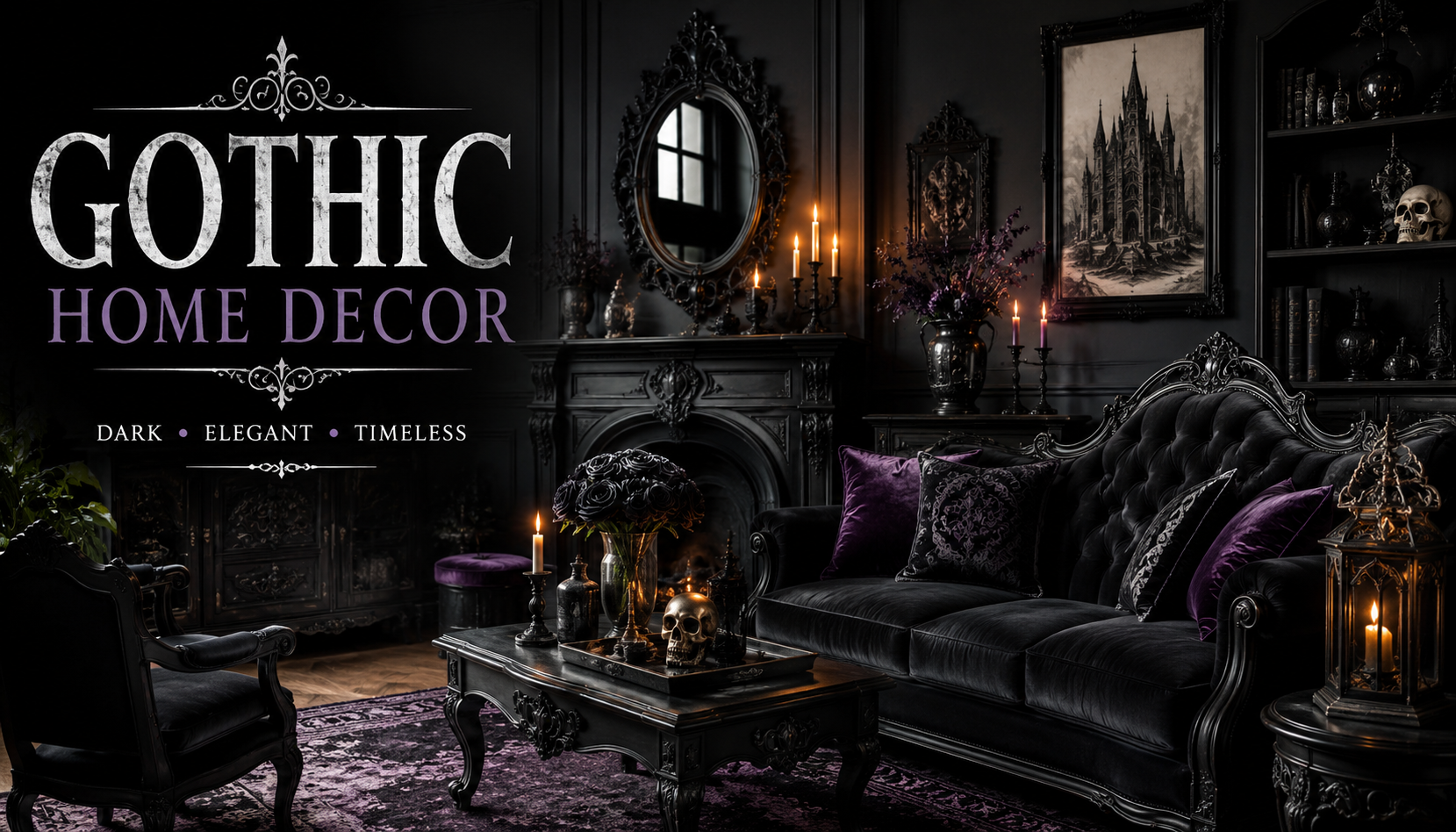
Gothic Home Decor
How to Design a Dark Elegant Home | Gothic Home Decor
Say ‘gothic home decor’ to most people and they conjure images of cobwebs, black walls and rooms that feel more haunted house than living space. That reputation is ancient. The real gothic interior design takes inspiration from Victorian architecture, medieval craftsmanship, and romantic-era drama to create spaces that feel rich, layered, and unmistakably elegant. The aesthetic is having a real moment in 2026 — fueled by a revival of interest in Victorian silhouettes, moody “gothic maximalism,” and period dramas that have brought dark academia and regencycore into the mainstream. Good gothic decor is not darkness for the sake of darkness. It’s about texture and depth and a home that feels intentional instead of trendy.
What is Gothic Home Decoration?
Gothic bold home decor is inspired by two very disparate influences: the soaring drama of Gothic cathedrals and the ornate, closed-in comfort of Victorian parlors. The end result was pointy arches, dark timber, wrought iron and stained-glass-inspired colour mixed with heavy textiles, antique furniture and candle-driven lighting. This should be distinguished from “goth” as a subculture of fashion—gothic interior design is an established architectural and interior decorating tradition, not a music scene aesthetic. The style is really about contrast at its heart: a black velvet sofa against a pale wall, gold accents against deep burgundy, natural light filtered through dark drapery. Gothic decor does not banish light and color but concentrates them. Elsewhere restraint makes each dramatic element count.
Essential Features of Gothic Interior Design
The same four building blocks, color, materials, lighting, and textiles, tend to weigh heavily on every gothic room, no matter its size or budget. Get these right and the space reads as intentional gothic elegance rather than a backdrop for a costume party. Get them wrong—too much black with no texture, harsh overhead lighting, cheap synthetic fabrics—and the same “gothic” label ends up looking flat or cheap instead of rich. The good news is that none of these elements require a complete overhaul. Many homes already have at least one piece, a dark wood dresser or an old mirror, that can anchor the look. Here are sections on how to use each element without dominating a room.
Color Palatte
Gothic color palettes focus on depth and not brightness. Black, deep burgundy, aubergine, forest green, and charcoal grey are the base colors and are often combined with warm metallic accents such as brass, gold, or antique bronze. It’s all about contrast, not monotony—one dark accent wall with lighter trim, or one jewel-toned sofa in an otherwise neutral room, reads far more sophisticated than four black walls. Avoid flat matte black in large doses as it can flatten a room and swallow light. Instead, use mixed finishes—glossy lacquer, velvet, satin—so the same dark hue catches light differently on surfaces.
Furniture & Material
Furniture is what gives gothic decor its reputation for “antique-ness”. Go for dark woods like mahogany, walnut or ebonized oak and wrought iron details on mirrors, candle stands and bed frames. Tufted velvet upholstery—chesterfield sofas, wingback chairs—gives the rounded, romantic softness that keeps the style from feeling severe. Here secondhand and vintage shops are a perfect hunting ground as gothic decor thrives on pieces with a real history and a slight imperfection, rather than showroom new furniture. Carved wood detailing, claw-foot tables and aged brass hardware all contribute to the feeling that each piece has a story.
Light
In a gothic room lighting does more work than almost anything else. Chandeliers — be they wrought-iron candle-style or crystal — are the classic center piece, but wall sconces, candelabras and warm bulbs are just as important for everyday ambiance. Ditch the bright, cool-white overhead lighting. It flattens out the mood the rest of your room is trying to build. Layer at least three light sources in each room: a statement fixture, an ambient source such as sconces, and a flickering element such as candles. A small investment that can make a big difference in how the style reads at night is dimmer switches.
Textile & Patterns
Textiles give the softness that saves gothic decor from museum exhibit. Heavy velvet drapes, damask or brocade upholstery, lace overlays and tassled trims. Layering is more important than any one fabric choice – a velvet throw over a linen sofa, or a lace runner across a dark wood table, creates the depth the style depends on. Deep jewel tones and black make a good base, but don’t shy away from the occasional patterned wallpaper with Gothic Revival motifs, such as Bayham Abbey-inspired prints, to add texture to walls without structural changes.
Gothic Room Decor Ideas
Gothic decor doesn’t have to be used throughout a whole house — in fact, it’s usually better when it’s not. Depending on the room, the amount of natural light, the function of the space, and whether it is shared or private, the style can be more or less intense. For example, a living room used for entertaining can handle bolder statement pieces than a small guest bathroom, while a bedroom needs softer, more romantic touches than a formal dining room. Here’s the room by room breakdown of adapting gothic elements – color, furniture, lighting and texture – to the specific function and constraints of each space in your home.
Ideas for Gothic Living Rooms
Gothic decor finds its most daring expression in the living room, where it’s designed for socializing and making a statement. anchor the room with a dramatic piece – a tufted velvet sofa, an oversized gilded mirror, or a stone-look fireplace surround – and build everything else around it. A dark accent wall and a crystal or wrought-iron chandelier set the tone right away without overloading the room. Top with a Persian or damask-print rug, brass side tables and a gallery wall of art in ornate frames. Gothic style is as much about atmosphere as it is about objects. Seating arrangements should be cozy and conversational.
Gothic Room Decor
A bedroom should be softer, more romantic in its gothic look, for it is a place of repose rather than entertainment. A dark wood or wrought iron four-poster or canopy bed frame immediately sets the scene with deep-toned velvet or damask bedding. Keep the light low and warm – bedside candle-style lamps or a small chandelier are better than bright overheads in here. Add a vintage vanity with an ornate mirror and layer in lace or sheer curtains to soften harder edges. It is designed as an intimate, immersive space, not a theatrical one.
Gothic Bath & Small Spaces
A small room such as a bathroom or powder room is a great place to experiment with gothic decor without a huge commitment as a little goes a long way in a small room. You can use a dark, moody paint color on all four walls for a dramatic, not cramped look, especially when paired with brass fixtures and a statement mirror. Sconces in the style of candles flank the vanity, giving off a warmth that overhead lighting cannot. Vintage-inspired tile in deep green or black-and-white patterns reinforces the aesthetic without requiring any furniture at all. These rooms are a low-risk place to go a little bolder than you would otherwise, as they’re used for a short span of time.
Gothic Dining Room/Entryway
Entryways and dining rooms are transitional spaces, so they’re ripe for gothic touches that create a big first impression without the need for daily upkeep. A big gilded or arched mirror by the front door, especially under a small pendant or lantern-style light, sets the tone right away. Dinner is an event in the dining room, where high-backed upholstered chairs circle a dark wood table and a low-hanging chandelier. Candlesticks or taper holders as a table centerpiece reinforce the mood without any reno. Both spaces are ideal for deep wallpaper or one accent wall, as neither has to compete with everyday clutter.
Gothic Style Decor & Varieties
Not all gothic decor looks the same, and knowing the sub-styles helps you pick a direction instead of mixing contradictory references. Victorian Gothic revels in elaborate, historically correct detail. Modern gothic brings the style down to clean lines and a restrained dark palette. Whimsigoth softens the aesthetic with celestial and nature motifs, invoking witchy, romantic imagery more than architecture. Dark academia takes gothic sensibilities and runs them through book-lined studies and vintage academic props, not candlelit drama. Even if you borrow lightly from another, choosing one of these as a primary direction keeps a room cohesive rather than like a mismatched theme.
Gothic Victorian
Victorian Gothic is the most detailed and historically based version of the style, taking its cues from 19th-century architecture and furnishings. Think dark carved wood furniture, tufted velvet upholstery, heavy drapery, layered patterned wallpaper, often with Gothic Revival motifs like pointed arches or trefoils. Crystal chandeliers, gilded mirrors and antique portraiture complete the look. This Style Works Well In homes with some period architectural detail in place, such as crown molding or a fireplace, because it depends on craftsmanship and history rather than minimalism. It’s the most maximalist and bold of the gothic sub-styles.
Modern/Minimalist Gothic
Modern gothic takes the same emotional core — drama, depth, contrast — and removes the ornamentation. Instead of layered antiques, go for clean-lined black furniture, matte finishes, and one statement piece, such as a sculptural chandelier or an arched mirror. The color is still dark but the palette is more simple; black, charcoal and one accent tone, not a variety of jewel tones. This style is well suited to smaller or more modern homes, where heavy Victorian furniture might not be suitable. It demonstrates that gothic decor doesn’t require ornate detail to read as gothic; restraint and strong contrast can carry the mood just as well.
Whimsigoth
Whimsigoth combines gothic darkness with a softer, more mystical mood, with celestial motifs such as moons and stars, dried florals and natural materials like rattan or wood with black accents. Forget heavy velvet and gilt ornamentation for a more relaxed, bohemian-adjacent feel – tapestries, crystals and layered candles instead of chandeliers and formal furniture. This option is great for renters or those on a smaller budget, as it relies more on accessories, textiles, and styling than large furniture pieces. It’s the most accessible entry point for anyone testing out gothic style without committing to a full room overhaul.
Dark Academia
Dark academia takes the gothic sensibility and filters it through scholarly, old-world imagery over castle drama. Think bookshelves up to the ceiling, leather-bound books, worn wood desks, brass reading lamps, and framed maps or botanical prints. Brown, olive and burgundy are favoured over black and tweed or wool fabrics take the place of velvet. It’s a softer, more livable interpretation that’s especially good in home offices, studies or reading nooks. While Victorian Gothic wants grandeur, dark academia wants lived-in, intellectual coziness – which makes it one of the easiest gothic sub-styles to keep in an everyday, functional space.
How to Add Gothic Decor on a Budget
You don’t have to go full renovation or designer-furniture budget to bring gothic style into a room—the aesthetic actually rewards resourcefulness, since antique and secondhand pieces read as more authentic than anything brand new. Instead of buying a room’s worth of furniture all at once, start small and layer up. Low-cost, high-impact swaps make a big difference:
- Try one accent wall in a rich jewel tone instead of painting a whole room.
- Thrift stores and estate sales are good places to find ornate mirrors, candlesticks and dark wood furniture.
- Swap out harsh overhead lighting for warm-toned or flameless candles.
- Add a velvet or damask throw pillow and one statement rug.
- Buy vintage-style art or botanical prints and frame them instead of buying new decor
These changes are a lot cheaper than buying new furniture but can change the mood of a room instantly.
Avoid these common mistakes
It’s easy to go overboard with gothic decor. Most “bad gothic” rooms fail for the same few reasons, not lack of effort. As much as the style depends on darkness, it depends on restraint and contrast. So knowing what not to do is as important as knowing what to do.
- Fill a room with dark colors and no light contrast, which makes spaces feel smaller and heavier.
- Using Halloween type props, such as fake cobwebs instead of real antique or vintage pieces
- Not using warm, layered light sources, but only harsh, cool-toned overhead lighting
- Trying to mix too many gothic sub-styles at once, creating visual clutter instead of cohesion.
- Skip texture variety so a room with all velvet or all matte feels flat instead of rich
Avoiding these mistakes can be more important than any one decor purchase.
Frequently Asked Questions (FAQ)
Is gothic decoration too dark for small rooms? Not if done with contrast. Bold, dark accent walls or deep-colored furniture can surprisingly work well in small rooms, particularly when combined with mirrors, brass or gold accents, and warm layered lighting to bounce light around. The error is not using a dark color in a small space, it’s using a dark color without lighter or reflective elements to balance it out. You may find that one statement piece is more effective than covering every surface. What colors are best for gothic home decor? The core gothic palette is black, deep burgundy, aubergine, forest green and charcoal grey, often offset with metallic accents such as brass, gold or antique bronze. Most successful gothic rooms do not select one dark color and run with it through out but they use one dominant dark tone, a lighter neutral and a metallic accent. This helps a space feel rich and layered rather than flat or too heavy, especially in rooms with limited natural light. How do I make gothic decor feel modern, and not costume-y? Embrace restraint over volume. Rather than throwing every gothic element into one room, opt for one or two dramatic focal pieces – a chandelier, a statement mirror, an accent wall. Look for clean-lined furniture, good textiles and authentic vintage or antique pieces rather than mass-produced “gothic” décor items, and steer clear of literal Halloween props (fake spiderwebs or skull motifs). The modern style is the craftsmanship and the contrast, not the visual noise. What is the difference between gothic and dark academia decor?Gothic decor is heavily influenced by medieval and Victorian architecture. It favors candlelight, velvet, wrought iron, and jewel tones to create a romantic, dramatic feel. Dark academia uses some of that same vibe but twists it into scholarly imagery: bookshelves, leather-bound books, brass desk lamps, and a brown-and-olive palette instead of black. Dark academia is more like a lived-in study. Traditional gothic decor is more about grander, more theatrical spaces like living rooms or bedrooms. Can gothic decor work in a rental?Yes — whimsigoth and accessory-driven approaches are particularly rental-friendly because they rely on add-ons that can be removed, rather than paint or permanent features. You can easily add and remove layered textiles, candles, dark-toned rugs, framed art, and secondhand furniture without having to touch walls. Peel-and-stick wallpaper and plug-in sconces add drama, and won’t break a lease. The trick is picking gothic elements that you can take with you, not ones that are built into the space itself.
Goth home decor isn’t about recreating a haunted mansion, it’s about creating a space that has real depth, warmth and personality in a world of matching, mass-produced interiors. Whether you’re going full Victorian drama or a softer whimsigoth accent wall, the same principle applies. Pick one strong focal point, layer texture and warm light around it, and let restraint do the rest. Pick one thing – a mirror, a chandelier, an accent wall – and build out from there.