
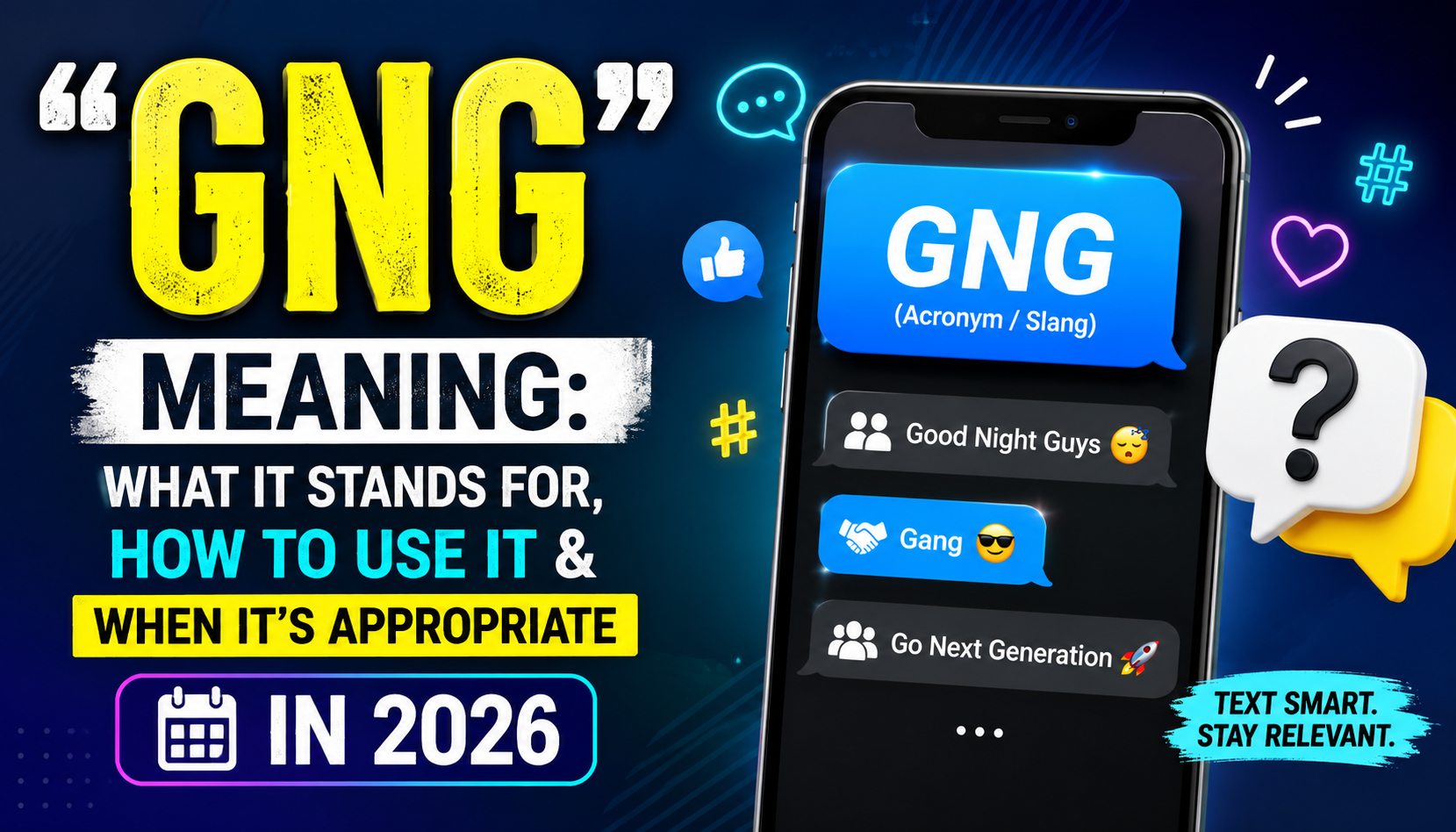
“GNG” Meaning: What It Stands For, How to Use It & When It’s Appropriate In 2026
GNG Meaning: What It Stands For, How to Use It & When It’s Appropriate In 2026
You’ve probably seen “GNG” pop up in a comment section, a text from a friend, or a caption under someone’s gym selfie, and paused for a second wondering what it actually means. It’s not a typo, and it’s not some new coded language either — it’s a shorthand version of a word most people already know. In short, GNG stands for “Gang,” and it’s used to show closeness, loyalty, or belonging to a group rather than anything criminal. This guide breaks down where it came from, how people use it correctly, and when you should probably leave it out of the conversation entirely.
What Does GNG Mean?
At its core, GNG is a stylized, shortened spelling of “Gang.” People drop the vowels to make the word quicker to type and visually distinct online, similar to how “brb” or “fr fr” evolved out of texting culture. In 2026, GNG almost never refers to organized crime — it’s used to describe a tight circle of friends, teammates, or online followers someone considers “their people.” Think of it as a badge of unity rather than a warning label. Context is everything: on social media or in a text between friends, it reads as affectionate. Outside that context, it can be easily misread.
The Literal Expansion
GNG isn’t a true acronym where each letter stands for a separate word — it’s a compressed spelling of “gang” with the vowels stripped out. This kind of abbreviation is common in internet slang, where speed and stylization matter more than grammatical accuracy. It functions the same way “fam” or “squad” does, just with a punchier, more clipped feel that suits captions, hashtags, and quick replies.
GNG vs. “Gang” in Everyday Slang
Spelling it “GNG” instead of “gang” isn’t random — it softens the word and strips away the heavier, more literal associations some people attach to “gang.” Typing GNG signals you’re in on the culture and using the term the way it’s meant online: as loyalty-speak, not literal group identification. It’s the difference between saying something and stylizing it for a specific audience that already understands the shorthand.
Where Did GNG Come From?
GNG’s roots trace back to hip-hop and street culture, where “gang” was already used loosely to describe a crew, collaborators, or close affiliates rather than a literal criminal organization. Rappers and their teams adopted shortened spellings like GNG in song lyrics, album art, and social captions as a stylistic signature. Over time, as hip-hop’s language bled into mainstream youth culture, the term picked up steam outside music entirely. Heading into 2026, GNG has fully crossed over into everyday texting, gaming chat, and short-form video captions, used by people with zero connection to the genre it originated from.
Hip-Hop and Music Culture Roots
In hip-hop, referring to your collaborators or close circle as your “gang” has long been a way to signal unity and support — think record labels, producer collectives, or artist crews branding themselves this way. Shortening it to GNG gave the word a distinct visual identity in song titles, merch, and captions, separating it from the word’s more literal, negative connotations while keeping the loyalty message intact.
Social Media and Short-Form Video Popularization
As hashtags, captions, and short-form video became core parts of how people communicate online, GNG spread quickly beyond music fans. Creators, gamers, and everyday users picked it up as a quick way to tag friends or shout out their circle. Platforms built around short clips and live chat accelerated this further, turning GNG into a recognizable piece of slang independent of its musical origin, now used casually across nearly every corner of the internet.
Common Ways People Use GNG Today
GNG shows up across a surprising range of everyday digital contexts, and the meaning barely shifts — it’s almost always about connection, backing, or belonging. Whether it’s a caption, a comment, or a username, the core idea stays the same: this is my circle, and I’ve got their back. Below are the most common situations where you’ll actually see it used, from casual greetings to full-on group branding in gaming spaces.
As a Show of Loyalty or Friendship
“GNG for life” or “real GNG” are common phrases used to express unwavering loyalty to a close friend group. It’s less about the literal word and more about the sentiment — people use it the same way they’d say “ride or die” or “my day ones.” It often shows up in captions celebrating friendships, reunions, or shared milestones.
As a Greeting or Sign-Off
Some people use GNG almost like a friendly nod, tacking it onto the end of a message or comment the way others might use “peace” or “later.” It signals familiarity and warmth without needing a full sentence, making it a quick, low-effort way to close out a casual exchange between people who already share that shorthand.
In Hashtags and Captions
GNG frequently appears in hashtags like #GNG or #RealGNG under group photos, celebrations, or milestone posts. It works as a quick label that ties a group of people together publicly, similar to how couples might tag a relationship hashtag, except applied to friend groups or online communities instead.
In Gaming Clan Names or Tags
Gaming communities have adopted GNG as part of clan names, tags, or usernames to signal unity within a squad. It’s common to see it bracketed before a gamertag (like [GNG] PlayerName) to instantly show which team or crew someone represents, especially in competitive or team-based titles.
GNG in Texting and DMs: How to Use It Correctly
Using GNG naturally comes down to tone — it works best in casual, familiar exchanges where the recipient already understands the reference. Dropping it into a text or caption should feel like an extension of how you already talk to that person, not a forced attempt to sound trendy. The key is treating it as a marker of closeness rather than a phrase you insert just to seem current.
Example Sentences
- “Wouldn’t trade this crew for anything, GNG for life.”
- “Made it through finals week — GNG kept me sane.”
- “Big win tonight, proud of my GNG.”
- “Miss the whole GNG, reunion soon?”
These examples show GNG functioning as a stand-in for “my people” or “my crew,” always tied to a sense of belonging rather than describing any formal or literal group.
Common Mistakes to Avoid
The most common misstep is overusing GNG until it loses meaning, tacking it onto messages where it doesn’t fit naturally. Another mistake is using it in contexts where the literal “gang” association could be taken seriously, like in professional messages or with people unfamiliar with the slang. When in doubt, save it for casual, friend-group conversations.
When Is GNG Appropriate — and When Isn’t It?
Like most internet slang, GNG’s appropriateness depends heavily on setting and audience. It thrives in casual digital spaces where tone is relaxed and everyone shares the same cultural shorthand. It struggles — or actively backfires — in formal, professional, or unfamiliar contexts where the literal meaning of “gang” could raise eyebrows or send the wrong message entirely.
Appropriate Contexts
- Texts between close friends
- Captions on personal social media
- Gaming usernames and clan tags
- Comments within communities that already use similar slang
Contexts to Avoid
Skip GNG in professional emails, school assignments, job applications, or any formal writing. It’s also worth avoiding around people unfamiliar with the term, since “gang” carries legal and social weight in serious contexts, and the shorthand won’t always translate the friendly intent behind it.
GNG vs. Similar Slang Terms
GNG isn’t the only word people use to describe their close circle, and knowing how it differs from similar terms helps you pick the right one for the moment. While they overlap in meaning, each carries a slightly different tone and cultural association.
GNG vs. Squad
“Squad” leans slightly more mainstream and gender-neutral, often used in broader pop culture (like “squad goals”), while GNG carries stronger ties to hip-hop and street culture roots. Squad also tends to feel a touch more polished, while GNG keeps a rawer, more casual edge.
GNG vs. Fam
“Fam” emphasizes a family-like closeness and is often used one-on-one (“you’re fam to me”), while GNG leans more toward group identity and collective loyalty. Fam feels warmer and more personal; GNG feels more like a banner a whole group rallies behind together.
Is GNG Still Relevant in 2026?
GNG remains firmly in use across gaming, social media, and youth slang in 2026, showing no real signs of fading. Slang terms with roots in music culture tend to have longer shelf lives than fleeting internet trends, and GNG’s simplicity and flexibility have helped it stick around. It continues to evolve alongside gaming and streaming culture, where crew identity and online loyalty remain central themes, suggesting it will likely stay relevant for the next few years at least.
Frequently Asked Questions
What does GNG stand for?
GNG is a shorthand spelling of “Gang,” typically used online and in texting to describe a close-knit friend group or crew. It’s not a formal acronym with separate letter meanings — it’s simply “gang” with the vowels removed for a quicker, more stylized look.
Is GNG the same as “gang”?
Not exactly. While GNG is derived from “gang,” it’s almost always used to mean a friend group, team, or squad rather than a literal or criminal gang. Tone and context make the difference between the two meanings clear.
Is it okay to use GNG at work or school?
Generally, no. GNG fits casual, friendly contexts, but it can be misread in professional or academic settings where “gang” carries more serious connotations. It’s best kept to texts, captions, and conversations with people who already understand the slang.
Where did GNG slang originate?
GNG originated in hip-hop and street culture, where “gang” was used loosely to describe close collaborators or crews. It later spread into mainstream texting and social media slang, detaching from its musical roots along the way.
Is GNG considered offensive?
On its own, GNG isn’t inherently offensive — it’s typically used affectionately. However, because it stems from “gang,” it can be misinterpreted in serious or formal contexts, so reading the room before using it matters.
What’s the difference between GNG and squad goals?
GNG focuses on loyalty and group identity, often used as a badge of belonging, while “squad goals” leans more toward admiring or aspiring to a group’s dynamic. They overlap but carry slightly different emotional weight.