
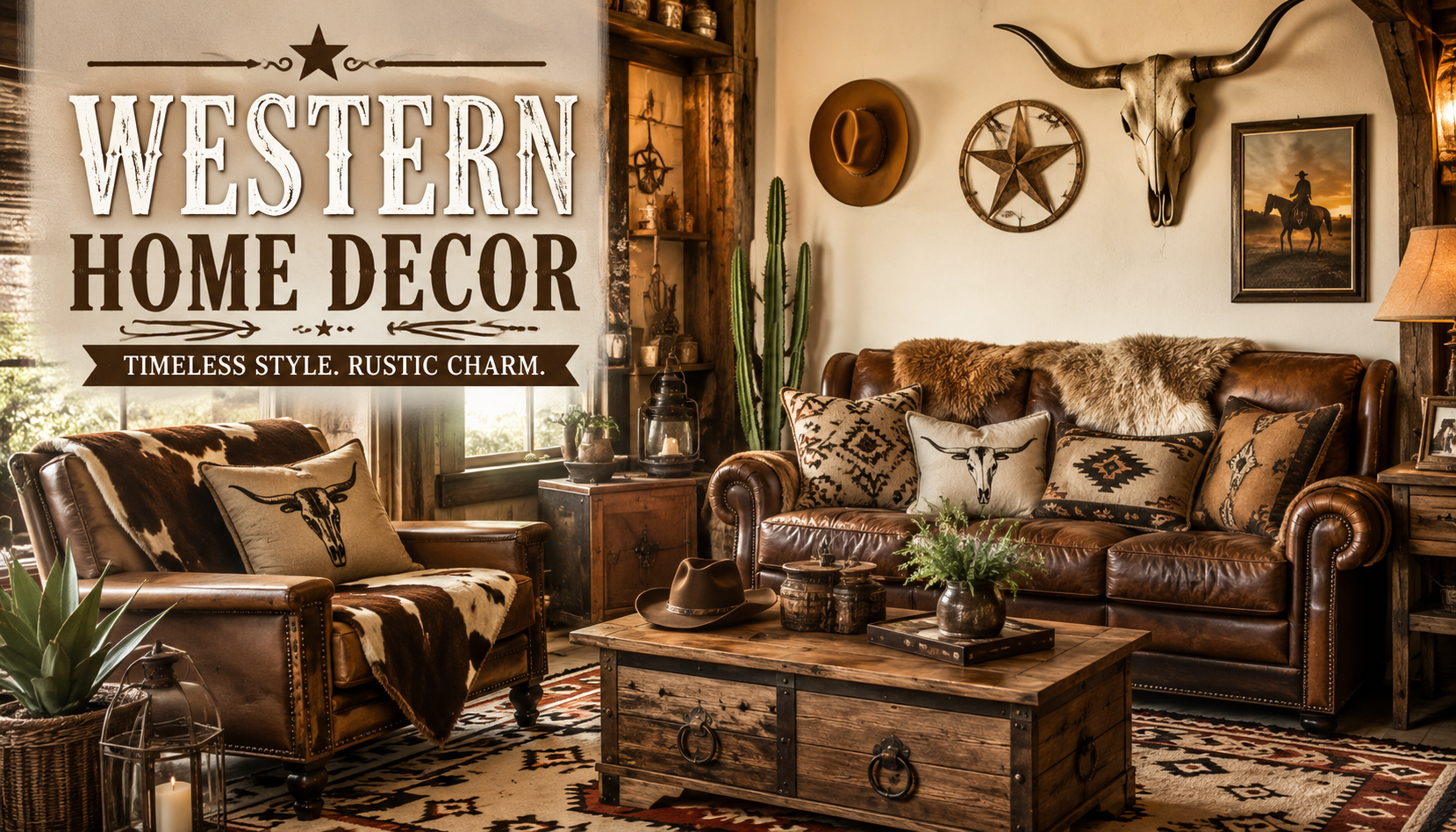
Western Home Decor
Western Home Decor: The Ultimate Guide to Rustic, Ranch & Southwestern Style
Western home decor has quietly emerged as one of the most popular design styles of the decade, replacing the clinical all-white minimalism with a warmer, lived-in feel. It takes ranch houses, old trading posts and desert landscapes and looks at it all through a modern lens. This guide takes you room by room through the house, deconstructs color palettes that actually work together, and shows you where to source pieces that feel authentic, not costume-y. Whether you’re remodeling an entire home, or just want to change a few accents, you’ll find practical, room-specific guidance below.
What Is Western Home Decor?
Western home decor draws from cattle ranches, frontier trading posts, and the wide-open landscapes of the American West. It uses natural materials – leather, raw wood, wrought iron and woven textiles – and combines them with earthy, sun-bleached colors. Western decor isn’t a style that chases one decade or trend cycle, it pulls from over a century of ranch life so it tends to age well and mix easily with pieces you already own. The idea is not a theme park cowboy look. It is warmth, texture and a sense of place.
Western Decor vs. Southwestern Decor vs. Rustic Decor
These three are all in one place but they are different. Southwestern decor takes cues from Native American and Mexican textile patterns, turquoise and adobe-inspired shapes. Rustic decor is broader—it simply means raw, unfinished materials such as reclaimed wood and stone, regardless of the region. Western decor takes the intersection as a jumping-off point, but with ranch-specific touches: cowhide, horseshoes, leather tack, and cattle-brand motifs. Understanding the difference will help you to shop smarter, rather than ending up with a mismatched mix of pieces that are all “vaguely southwestern-ish” but don’t have a common thread.
Main Features of the Western Style
There are some recurring markers in real western spaces. Find:
Natural Materials Solid Wood, Leather, Iron and Stone Instead of Plastic or Laminate
Weathered, worn-in finishes versus glossy or brand-new looks
Animal-inspired textures – cowhide, sheepskin and woven wool
Handcrafted details such as hand-tooled leather or wrought-iron hardware
Warm earthy color stories rather than cool greys or stark white
All these elements work alone, or together for a fuller effect.
Western Home Decor Color Schemes
Western color schemes are taken from the desert at different times of the day. Think sunbaked clay, dried sagebrush, and the deep indigo of workwear denim. These tones are warm and grounded rather than trendy, which is part of why the style stands the test of time. The trick is to use warm neutrals for your base and one or two saturated accent colors. If you use too many bold hues at once the room begins to feel like a costume set rather than a home.
Warm Neutral Base Hues
Begin with colors that are straight out of the landscape: sun-bleached tan, weathered wood brown, adobe clay and soft cream. Walls, large furniture and flooring should account for around 70% of a room. They’re forgiving colors that don’t compete with textures like leather or cowhide, which is important since western decor relies so heavily on material contrast. If you are repainting, warm off-whites and taupe are better options than cool grays, which can make the space feel disconnected from the rest of the style.
Accent Colors (Turquoise, Rust, Ochre)
After you have your neutral base, bring in accent colours with smaller, interchangeable items like pillows, rugs, pottery or wall art. Turquoise is a nod to the traditions of southwest jewelry and pottery. Rusted and burnt orange reflects desert rock formations and sunset skies. Mustard ochre – warmth without too much yellow. Using these as 10-20% accent colors keeps the room flexible, so you can rotate seasonal textiles without repainting or replacing furniture every time your taste shifts just a little.
Western Living Room Decor Ideas
The living room is one of the first rooms you get to experience western style and it’s also the easiest room to fully commit to. A leather sofa or armchair anchors the space, and a cowhide or Navajo-style rug grounds the floor. Add texture to your space with woven throws and sheepskin accents and bring in wood furniture with a visible grain, like coffee tables, media consoles or open shelving. A well-placed gallery wall of landscape art or vintage western photography lends the room a finished look without it feeling like a set piece.
Statement Pieces of Furniture
If one or two large pieces of furniture carry most of the western identity, the rest of the room can be simpler. A leather sofa in distress, a live-edge wood coffee table or a wagon-wheel-inspired chandelier are all anchors. Never go overboard trying to make a splash with too many “statement” pieces; choose one seating piece, one accent piece, and let the small decor items fill in the gaps. This also helps to keep costs down as one good quality piece of leather will often be less than several smaller accent pieces.
Layers and Textiles
Texture does a lot of the visual work in western rooms, as the palette of colour is fairly muted. Layer:
- A cowhide or wool rug layered on a jute base rug
- Pendleton woven throw blankets on the sofa arm
- Sheepskin accents to chair seats
- Leather or suede throw pillows mixed with woven cotton ones.
Even if the colour palette itself is pretty limited, mixing at least three textures per seating area stops the room from looking flat.
Western Wall Art & Decor
Wall decor is the most obvious place to show off your personality. The vintage rodeo posters, the black and white ranch photography, the framed topographic maps of western states all feel authentic, not themed. Sculptural accents like horseshoes, branding irons, and antler sconces do well if they are kept to a minimum, one or two per wall, not a dozen jammed together. Mounted steer skulls or faux antlers can make a single bold focal point above a mantel or sofa, but they work best as one statement rather than repeated throughout the room.
Ideas for Decorating a Western Bedroom
A western bedroom should be a peaceful ranch retreat, not a busy showroom. Focus on the big-ticket items, like the bed frame, dresser, and nightstands, and opt for solid wood with clean, sturdy lines, not ornate details. Much of the styling is accomplished through the bedding: layered Southwestern-patterned quilts, striped Pendleton-style blankets or solid, earth-toned linens add warmth without visual fuss. A leather bench at the foot of the bed and a woven rug underfoot finish the space without overstyling the room and keeping it feeling restful.
Bedding & Linens Western Style
Bedding is the quickest way to change the whole mood of a bedroom without buying new furniture. Think muted rust, cream and indigo Southwestern geometric patterns or simple striped wool-blend throws folded at the foot of the bed. Stick to two or three patterns maximum – a solid duvet, one patterned throw and patterned or textured pillow shams tend to look intentional rather than mismatched. Natural fiber fabrics like cotton, wool and linen also contribute to the handmade, unpolished feel that defines the style.
Rustic Furniture & Accents
Furniture in a western bedroom should look solid and a little weathered, not polished or mass-produced. Solid pine or reclaimed wood nightstands, wrought-iron bed frames, and a leather accent chair in the corner all help to reinforce the theme without overwhelming the room. At the foot of the bed, a vintage trunk provides both storage and a design element. Keep the hardware simple, opting for iron or aged brass pulls instead of anything shiny or chrome, which can clash with the room’s warm, matte finishes.
Kitchen & Dining Decor Western
Western-style kitchens and dining rooms are less about obvious theming than material choices. Wrought-iron light fixtures, hand-painted southwestern tile backsplashes and wood cabinetry with visible grain all bring the aesthetic in without cluttering a functional space. Open shelves filled with stoneware pottery or woven baskets add warmth, and a solid wood dining table anchors the space. This is where subtlety is the way to go — a kitchen that goes full-on cowboy themes can start to feel more like a gimmick than a lived-in space.
Cabinetry & Countertop Designs
Natural wood cabinetry in warm woods like walnut or knotty pine does more to set the tone of a western kitchen than paint color alone. Some of the upper cabinets are replaced by open shelving with pottery, cast iron and woven storage baskets. Butcher block and honed stone are better countertop choices than glossy polished surfaces that can feel out of place next to matte wood and iron fixtures. Wrought iron cabinet pulls and hardware complete the look.
Dining Table Decor & Tableware
The centerpiece of the room is a solid wood table with a slightly distressed or hand-finished top. In addition:
- Stoneware or hand-painted pottery dinnerware
- Natural fiber woven placemats
- Candle holders (wrought-iron, wood)
- A simple runner in a south western inspired pattern
Incorporate table settings on a daily basis, but keep them subtle and reserve the more daring patterned pieces for occasions so the space does not feel too themey day to day.
Western Wall Art & Accent Pieces
Wall decor is what ties all the rooms together in one cohesive style, so it’s worth planning for intentionally rather than room by room. Landscape photography, vintage maps, and framed textiles work across a number of spaces. Horseshoes, wagon wheels, branding irons are best used as occasional accents, not as repeated motifs in every room. Used once, well, it reads as authentic; used everywhere, it reads as costume decor. Strong, low-clutter focal points for entryways or hallways include mounted antlers or a single large wood-framed mirror.
Where to Find Authentic Western Decor
The best Western pieces aren’t necessarily new – vintage and antique sources tend to have more character than mass-produced retail versions. Estate sales, ranch auctions and antique malls in western states often offer genuine tack, pottery and furniture at reasonable prices. For handmade pieces with a modern edge, Etsy and independent leather or woodworking artisans are both good options. Now, big box retailers are also carrying western-inspired lines that work great as budget friendly basics like rugs and throw pillows, as you slowly build out statement pieces.
Tips for Thrift & Antique Shopping
Thrifting western decor takes patience, but it’s worth it. Check antique malls and estate sales in rural or western areas first; the merchandise is usually more authentic and better priced than in cities. Look past surface wear — a scuffed leather chair or a dented metal sign often cleans up better than you might expect. Measure large furniture pieces and don’t hesitate to bargain at estate sales where there’s often room to negotiate, particularly close to closing time on the last day.
DIY Projects for Western Decor
There are a few western accents that are easy to make at home if budget or availability is tight. Drapping a plain frame with a faux cowhide makes instant wall art. Mason jars can be wrapped in leather cord or rope to create easy rustic candle holders. A plain wood shelf rubbed down with dark wax is distressed for a fraction of the cost of buying pre-distressed furniture. These projects also allow you to customize sizing and finish to match your space exactly.
Western Home Decoration on a Budget
You don’t have to replace every piece of furniture to create an authentic western style. Start with textiles. Rugs, throws and pillows are the cheapest way to change the mood of a room and the easiest to swap out later. Thrifted wood furniture can be sanded and refinished for a fraction of the price of new. Save your spending for one or two quality anchor pieces like a leather chair or solid wood table and fill in the rest gradually. This also stops the room from looking too rushed or too matched.
Current Western Decor Trends for 2026
The “New West” aesthetic has been gaining ground — it takes traditional western materials and combines them with cleaner, minimal lines borrowed from mid-century design. Think of a leather sofa with simple tapered legs rather than ornate carvings or a single antler accent instead of a full mounted display. Sustainable and natural materials are also becoming more important, with reclaimed wood and undyed wool textiles replacing some of the more theatrical elements of earlier western trends. The overall direction is quieter, more editorial, and easier to live with over the long haul.
Frequently Asked Questions
What is western home decor? Western home decor revolves around natural materials like leather, raw wood and wrought iron, combined with earthy, sun-bleached color schemes. Instead of following the trend cycle of one decade, it draws inspiration from ranch life, frontier trading posts and desert landscapes. Cowhide textiles, handcrafted leather goods and weathered finishes are key markers. It’s a versatile style that can be paired with furniture you already own, and it’s more about texture and warmth than polish. Are western decor and farmhouse style the same? No, but there is some overlap. Farmhouse style is all about shiplap, whites and creams, and cottage-inspired touches. Western decor uses warm earth tones, leather and ranch-specific elements such as horseshoes and cowhide. Both use natural materials and a sense of being lived-in, but western decor is more directly inspired by cattle ranches and desert landscapes, while farmhouse decor is inspired by rural cottage and barn aesthetics with a lighter, airier palette overall. What are the best colors for western decor? Most walls and large pieces of furniture should be in warm neutrals such as tan, clay and cream. Use accent colors sparingly. Turquoise, rust and mustard ochre are good in pillows, rugs or pottery. Keep bold colors to 10–20% of the room so it doesn’t feel overwhelming. Cool grays and stark whites tend to clash with the warmth that comprises genuine western color stories. How can I add western style without overdoing it? Choose one or two anchor pieces, like a leather sofa or a wood dining table, and let smaller accents do the rest. Avoid clustering several bold objects of the same type, such as mounted antlers or branding irons, in one room. Instead of sticking to obvious motifs, layer textures like wool, leather and cowhide. It’s subtlety in material choice, not heavy theming, that makes a space read as authentic, not costume-like. Where can I find real western decor items? Western estate sales, ranch auctions and antique malls often have real vintage items at reasonable prices. Or, for a modern edge, consider a handmade option from Etsy or independent leather and woodworking artisans. Even big-box stores have western-inspired lines now, which are great for budget items like rugs and pillows. The most balanced and authentic looking result usually comes from combining vintage sourcing with a few new basics. Is western decor still in style 2026? Yes — western decor has stayed true to its roots and has evolved into what is often called the “New West” aesthetic, which blends traditional materials with cleaner, more minimalist lines. More theatrical, busier elements of earlier western styles are being swapped out for reclaimed wood, undyed wool, and single statement accents. Its style lasts because it is made of natural materials that are timeless, not trend cycles that change quickly, so it ages well in a home.
Conclusion
Western home decor works because it is based on materials and colors that are not trendy – leather, wood, and earth tones look better as they age, not in a few years. Whether you’re going all out with a ranch-style living room or just adding a cowhide rug and a few leather accents, the trick is restraint: pick a few authentic anchor pieces and let them do the work for the room. Start in one space, get to know the palette and grow as your collection of pieces organically evolves over time.