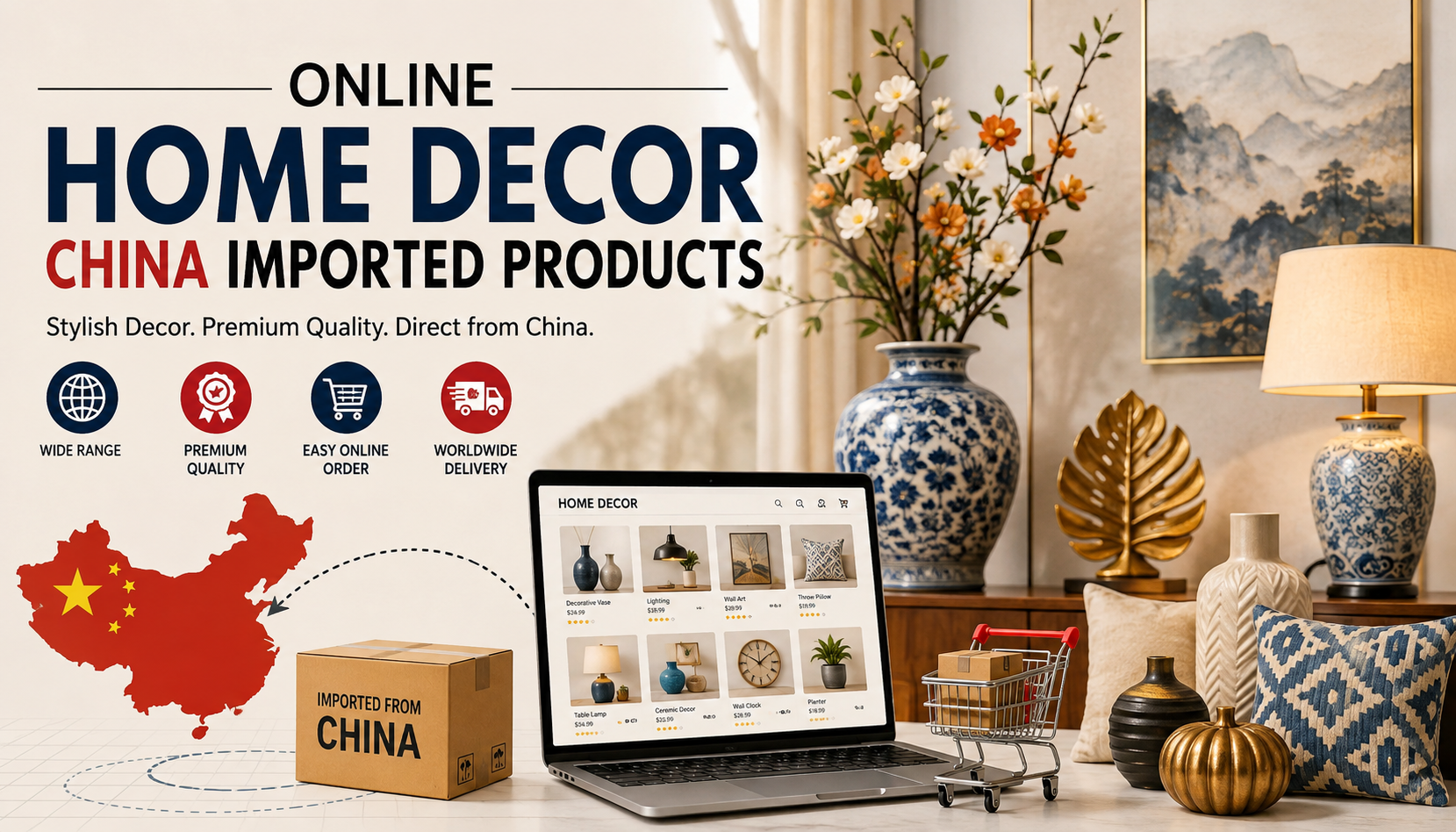
Online Home Decor China Imported Products
Why China-Imported Home Decor Rules Online Shopping
China’s manufacturing ecosystem has changed the way the world shops for home decor. Factories have decades of investment in ceramics, textiles, metalwork and injection moulding, so they’re capable of producing intricate designs at a scale most other regions simply can’t match. This means shoppers get lower price points without automatically sacrificing craftsmanship. Couple in mature export logistics – consolidated freight, established customs pathways, integrated e-commerce fulfillment – and it’s easy to see why so many online stores source decor from Chinese suppliers. For shoppers, this translates into access to design trends (think minimalist ceramics, boho textiles, art deco lighting) months before they reach boutique retailers elsewhere, often at a fraction of the price.
Top Categories of China-Imported Home Décor
Chinese manufacturers cover nearly every decor category, but a handful consistently deliver the best combination of value and design variety for online shoppers. These are the categories you’ll want to focus on when evaluating import-heavy storefronts.
- Tapestries and wall art
- Lighting and fixtures
- Planters, Vases and Ceramics
- Rugs, cushions, textiles
- Furniture accents, small scale
Each category has its own quality benchmarks and shopping considerations, discussed individually below.
Wall Art + Tapestries
One of the strongest categories for imported decor is wall art, which includes canvas prints, metal wall sculptures and woven tapestries. Chinese vendors are experts at copying complex designs – such as mandala tapestries or textured 3D wall panels – at prices that would be hard to beat with locally made versions. If you’re shopping this category, prioritize listings that include detailed fabric or material specifications, because “tapestry” can mean anything from thin polyester to heavyweight cotton blends. Canvas prints also differ in the quality of the frame, so find out if the piece is ready to hang or if you’ll need to add framing hardware.
Lamps & Lighting
The fastest-moving zone of design innovation is lighting, and Chinese manufacturers are often first to market with new silhouettes – rattan pendant shades, mushroom lamps and sculptural table lights. Lighting is electrical, so quality checks are more important than in almost any other category. Look for listings that mention voltage compatibility, certification marks (CE, UL, or the equivalent), and cord length. Ceramic and resin lamp bases are usually safe bets, but always check what kind of bulb and wattage they can take before committing to buy as this is a common reason for returns!
Planters, Vases & Ceramics
Ceramic decor continues to be one of the most mature and consistent categories for import buyers. There has been hundreds of years of specialization in Chinese ceramic production, including such areas as Jingdezhen, and this is reflected in the consistency of glaze quality and form across mass-market listings. Some vases and planters are hand thrown stoneware, others are slip cast decorative pieces, so there is a wide range of pricing depending on the method of production. For planters specifically, if you intend to grow live plants, be sure to check for drainage holes, as many decorative planters are meant only for dried arrangements.
Cushions, Rugs & Textiles
Textile decor boasts one of the largest arrays of styles online, including everything from Persian-inspired area rugs to minimalist linen cushion covers. Material composition is the spec you want to pay the most attention to here. Polyester blends feel and wear differently than cotton or jute, and pricing should reflect that difference. Good listings will tell you the pile height for rugs, and thread count or GSM (grams per square metre) for cushions and throws. Buyers furnishing full rooms should also request or view color-accuracy photos, since textile dye lots can vary slightly between production runs.
Furniture Accents (Small Scale)
Accent stools, nesting side tables and decorative shelving are small pieces of furniture that nicely complete this category, offering functional décor at import-friendly price points. Rattan, bamboo and engineered wood are the mainstays in this space and they each have a different durability profile. Rattan and bamboo items are light in weight and ship well, but should be used indoors and kept away from moisture for long periods of time. Engineered wood accents are sturdier but heavier and more expensive to ship. Always look at the weight capacity specifications before you purchase stools or side tables that are intended for regular use, not just for decorative display.
How to Judge Quality Before You Buy
Even in a single product category, import listings can be of drastically different quality, and evaluation skills are not optional, but essential. The good news is, if you know what to look for, you can spot most of the red flags before you get to the checkout. The most obvious signal is material specificity – vague terms like “premium fabric” with no composition details are often a sign of lower grade materials. Another good indication is the seller’s willingness to answer questions before you make a purchase. Experienced vendors usually reply promptly to queries regarding materials and dimensions. These checks, plus a close look at buyer feedback (not just star ratings), give a much truer picture of quality than photos alone.
Key Red Flags to Look Out For
There are some listing patterns that deserve extra scrutiny. Beware of stock photos that don’t match the seller’s own product images, as this is often a sign of dropshipping from an unverified source rather than direct manufacturing. Also, no weight given? That’s another red flag. Real ceramic, metal or wood will always list a weight, and if it doesn’t, it usually means it’s made from some light material that won’t last as long. Be cautious of listings that only show 3D renderings and not real photos, especially for furniture accents, and double-check dimensions against the product’s intended use.
“Reading Reviews & Photos” Critically
Star ratings are not enough to judge by. Look for written reviews that mention specifics, such as color accuracy, packaging condition upon arrival and if the item is the listed size. Reviews older than 12 to 18 months might not be relevant to current production quality, as suppliers often change materials or manufacturing partners. Textiles and ceramics are very well suited to photos submitted by customers as the true color can be changed by professional lighting. Choose listings that have a steady stream of recent reviews, rather than those with a lot of old, unverified comments.
Understanding Pricing Tiers: Budget vs Premium Imports
Not every decorative item imported from China belongs to the same price range and knowing what distinguishes the different levels can help buyers avoid paying too much and underestimating the quality requirements. Cheaper items are often made from synthetic materials, are produced with simpler processes and packaged in lighter packaging, making them ideal for temporary spaces, rentals or trend-driven purchases that are meant to be replaced. Mid-tier and premium imports use higher-grade materials, tighter manufacturing tolerances and better quality control inspections prior to shipping. In competitive markets price alone may not always be a reliable indicator of quality. The material and review checks above, combined with price research, give a more complete picture.
What Causes Price Differences
There are many factors of production that explain why similarly looking items have different prices. Hand finishing steps—glazing, hand painting, embroidery—add labor cost that machine-only production avoids entirely. Material sourcing is hugely important, too, because solid wood, natural rattan or high-thread-count textiles are more expensive to source at the raw material stage than synthetics. Order volume also affects per-unit pricing, so sellers offering steep wholesale discounts are often passing on savings from large manufacturing runs, not skimping on the product itself.
Additional Fees (Shipping, Duties, Returns)
The listed price is not always the total cost. Depending on your country’s thresholds and the declared value of the product, import duties and customs fees can add a meaningful percentage. It might be worth checking out these limits before ordering large or high-value items to avoid any surprise charges. Shipping costs for bulky decor (rugs, furniture accents) are often calculated separately and can be substantial for heavier pieces. It is also worth checking the return postage carefully, since many import sellers do not pay for return freight and this can mean an unsatisfactory item costs almost as much as the original purchase to return.
Where to Buy Online Safely
Sourcing well is as important as sourcing directly. Trustworthy buying experiences rely on a combination of platform-level buyer protections and cues of seller trustworthiness, and checking both reduces the risk of disputes over damaged, delayed, or misrepresented items. When you buy through an established marketplace you typically have more recourse if something goes wrong than you would with a standalone shop, but standalone shops (such as Shopify stores) can be equally reliable when they are upfront about their sourcing and responsive to customer service queries. The idea is to combine platform protection with individual seller vetting, not to choose one over the other.
Verified Marketplaces Vs. Independent Stores
Typically, large marketplaces have buyer protection, dispute resolution, and standard return policies in place, making it a little less risky to buy imports for the first time. Independent stores, in contrast, vary enormously in reliability. Some buy direct from vetted manufacturers and deliver excellent service, while others are unknown resellers with little accountability. Look for a physical business address, clear contact information and transparent shipping times when buying from an independent shop, as these are often missing from lower quality operations.
Indicators of a Credible Seller
There are a few tell-tale signs that reliably distinguish good import sellers from bad. You can often spot a trustworthy seller because they’ll give you detailed material specs right up front instead of waiting for you to ask, have consistent product photography throughout their catalog and give clear estimated delivery windows rather than vague shipping promises. Responsive customer service, especially pre-purchase, is one of the best predictors of post-purchase reliability. Generally, stores that have been around for a long time and have a steady stream of reviews over time are safer choices than newly listed stores with limited history.
Style Tips: How to Mix Imported Pieces in Your Home
Imported decor pieces shine brightest when styled with intention, not just as stand-alone statement pieces. Import-focused stores offer enough variety to mix textures, origins, and eras within a single room, but to do this well, you need a consistent anchor – a shared color palette, material tone, or design era – to keep the space curated, not cluttered. The most cohesive results are obtained when each imported piece is seen as one element in a larger design narrative, not the whole story.
Blending Imported Decor with Existing Styles
The easiest way to add new imported pieces is to match to a color or material anchor that’s already in the room. A rattan accent chair fits right in with existing wood tones, and a ceramic vase in a complementary glaze can tie together a neutral palette with a bolder accent wall. Don’t introduce more than two or three new textures at once – overlapping patterns (tapestries, rugs and cushions together) can compete rather than complement. 8. With one imported statement piece at a time, adding pieces feels intentional.
Sustainability and Ethically Sourced Materials
When sourcing decor from a foreign manufacturer, it’s fair to ask questions about environmental impact and labor practices, and it’s worth considering those issues along with price and design. Shipping distance of course adds to a product’s carbon footprint versus local-made alternatives, but bulk container shipping is generally more efficient per unit than smaller regional freight. For labor practices, look for sellers that share factory certifications (BSCI, SA8000) or are transparent about their manufacturing partners — this isn’t always something that’s actively shared. Those buyers who are conscious of sustainability can also opt for natural materials – rattan, solid wood, stoneware – over their synthetic counterparts, which generally have a lower environmental footprint over the course of their lifetime.
Frequently asked questions
Is home decor imported from China of good quality? Quality is not uniformly high or low, but varies widely across sellers and across categories. Ceramics and textiles from established manufacturers are often very good, as are budget lighting and furniture accents (the latter being more hit or miss). Regardless of the price, the most dependable way to gauge quality is to look at material specs, recent reviews and seller responsiveness prior to purchasing.
How long does it take to ship imported home decor? Shipping timelines vary from 1-4 weeks depending on the shipping method, seller location and destination country. There are fast options but they are going to be a lot more expensive. Large items such as rugs or accent furniture often ship separately and take longer than smaller decor pieces because of freight consolidation requirements.
Are there customs charges when buying home decor from China? Customs fees depend on your country’s import thresholds and the declared value of your order. Many countries have a duty-free minimum, so smaller orders often avoid extra charges entirely. Larger or higher-value orders may incur duties, so checking your country’s specific threshold before ordering helps avoid unexpected costs at delivery.
What’s the difference between wholesale and retail imported decor? Wholesale purchasing involves buying in bulk directly from manufacturers or distributors, typically at significantly lower per-unit prices but with higher minimum order quantities. Retail imports are single-unit purchases through online stores, priced to include the seller’s markup, marketing, and customer service overhead, making them more practical for individual home shoppers.
How can I verify a seller is legitimate? Look for a physical business address, consistent and original product photography, transparent shipping and return policies, and a steady history of recent customer reviews. Responsive answers to pre-purchase questions about materials or dimensions are also a strong indicator of a legitimate, accountable seller.